



Case study based on project documents. This describes the editorial programme and prepared work; measured performance outcomes are not claimed.
The problem
Existing expertise needed a consistent route into content
TVProperty had property expertise, a portfolio of websites and an existing library of articles. The next question was how to make that content support the business more consistently as the programme grew.
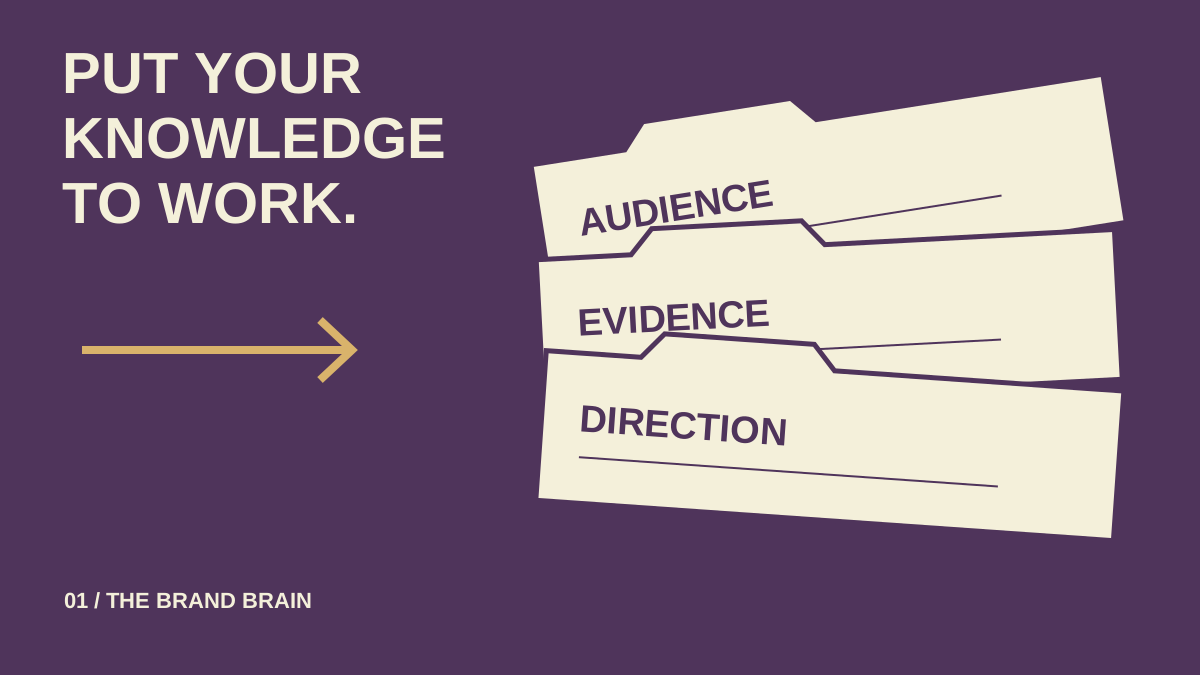
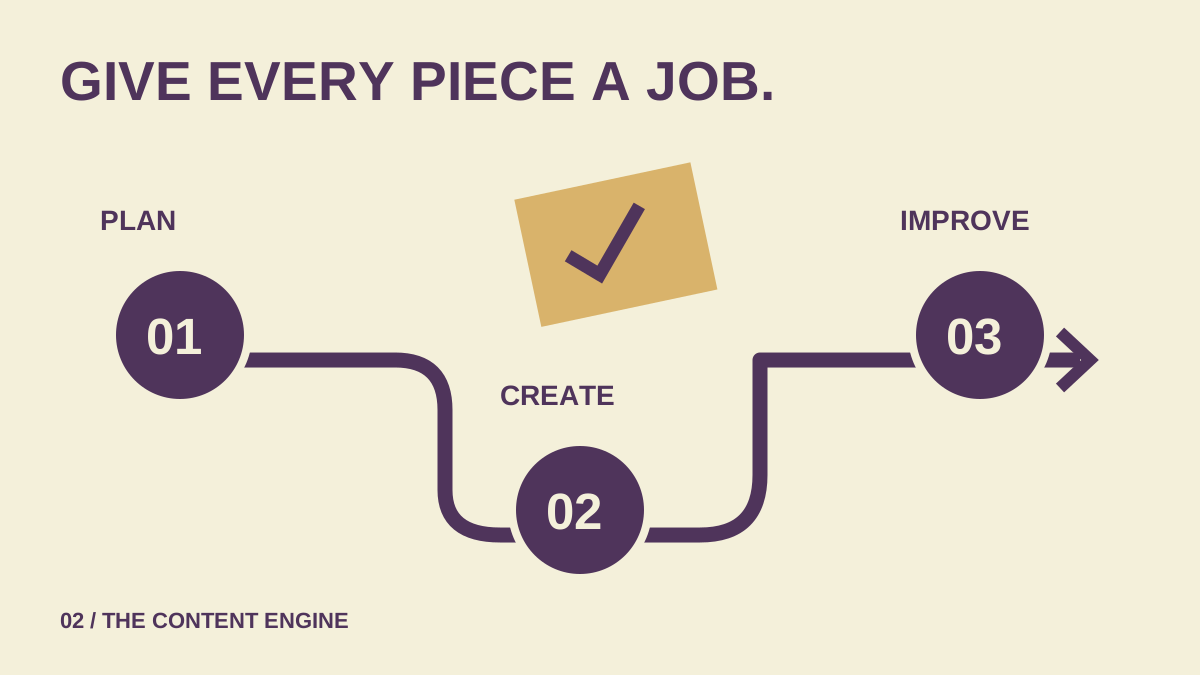
We built the work around two connected services. The Brand Brain established the audience knowledge and editorial direction. The Content Engine put that thinking into practice through topic planning, research, drafting and review. The audit informed both, while the developer handoff prepared the websites to support the resulting content.
The opportunity
Connect four websites through one editorial process
The opportunity was to turn the company’s knowledge into an editorial reference that could guide recurring production. Each website needed a clear role, and each article needed an audience and question to serve.
A Brand Brain would establish that direction. A Content Engine would put it to work through topic selection, research, drafting and review. Preparing the publishing requirements alongside the articles would give the next person a usable release package.
The research
Audit the content and identify gaps in coverage
The initial audit reviewed 90 publications across three active sites, with a fourth website in scope for expansion. We compared the articles with Google Search Console, Google Analytics and the sites’ own viewing figures. That distinction mattered: a popular article in the internal counter was not necessarily bringing people in through search.
The review identified overlapping articles, missing authorship and sources, and opportunities to serve investors alongside homebuyers. It gave us a reason to update, consolidate or commission a page before putting it on the calendar.
For the developer, the audit also set out the need to address competing URLs and redirects when consolidating duplicate content. Growing the library needed to begin with a clearer foundation.
Turn the audit into production priorities.
The audit mattered because publishing more of the same could carry existing problems into a larger library. Overlapping answers needed consolidation decisions. Missing sources and authorship needed editorial and template changes. Gaps in coverage needed briefs that served a distinct decision.
We separated content popularity from search performance. Internal page views and organic search clicks describe different things. Looking at them together helped establish which pages had a search opportunity and which apparently strong articles needed a closer look at where their traffic came from.
The resulting priorities connected several kinds of work. Editorial updates could address weak explanations and unsupported claims. Developer requirements could address URL consolidation and page structure. New commissions could fill a gap once the existing answer had been checked.
The initial audit covered 90 publications. Later topic-planning documents checked a larger, changing live inventory. Those are different snapshots of an active content programme, so we have kept the initial audit scope separate from the subsequent article package.
| Finding | Decision it informed |
|---|---|
| Repeated or overlapping answers | Decide whether to update, expand or create a distinct page. |
| Unclear evidence or authorship | Add source requirements and define visible author information. |
| Different buyer and investor needs | Assign a specific audience and decision to each brief. |
| Multiple websites | Record where each topic belongs and how related pages should connect. |
Implementation
Build the Brand Brain around evidence and audience needs
We organised the Brand Brain into working references covering the brand, offerings, author expertise, audiences, pain points, competitors, topics, voice and individual websites. This gave the team somewhere to look when deciding who a piece should help, what it could credibly say and where it belonged.
Buyer and investor needs were kept distinct. We also defined the role of the main TVProperty website alongside the building websites, so a broad property question and a local application could complement each other. Unconfirmed details remained visible as gaps to resolve.
The voice guidance came from the strengths of the original investment and mortgage articles: a calm expert who helps the reader make a decision with real numbers. Explain technical terms, show the calculation when useful and avoid promises the evidence cannot support.
Those references became inputs to the brief. Audience, angle, sources and topic boundaries could be carried forward into production, giving each new article a more specific starting point.
Brand and offerings, audiences and personas, pain points, topics and competitors, voice and tone, and website roles.
Two audiences.
Different decisions.
From the audience reference:
“TV Property serves two distinct audiences: property buyers and investors.”
The source labels its personas as working hypotheses inferred from the existing articles, awaiting confirmation from customer evidence.
Keeping the gaps visible gives the next brief a research question to resolve.
Make the Brand Brain useful at the point of writing.
The reference was organised into separate files so a brief could use the part of the knowledge base relevant to its assignment. Brand and offering information helped set the context. Audience and pain-point references helped define the reader. Website roles and topic planning helped decide where an answer belonged.
Evidence status was part of that structure. The early persona document explicitly labelled its audience interpretations as hypotheses inferred from the existing articles. It left customer language and unconfirmed decision criteria as gaps. That distinction prevents an internal assumption from quietly becoming a claim about what customers have said.
The writing guidance developed as the work progressed. The later tone document drew on the original investment and mortgage articles and set a more precise standard: direct explanations, practical numbers, restrained claims and a consistent relationship with the reader. It also addressed rhythm, paragraph structure and the use of tables and lists.
A working reference still needs maintenance. The source workspace contains earlier snapshots and unresolved details, so it would be inaccurate to describe it as a perfectly reconciled database. Its role in this project was to make the editorial context and its gaps explicit, then carry the relevant decisions into each assignment.
Running the Content Engine.
The ongoing plan is eight articles per month across the four websites. This is a long-term editorial commitment: the Brand Brain provides continuity between monthly cycles, while each new brief builds on the existing library and the role of its owning website.
With that direction in place, we worked through a repeatable production cycle. The topic queue recorded the intended audience, demand signal, owning website and whether an idea was new, an expansion or an update. Checking the existing library was part of choosing the topic.
Research and briefs then narrowed the assignment. Each piece needed a clear question, a useful angle and sources appropriate to the claims. Drafting used the shared voice guidance, followed by factual and editorial checks. AI-assisted production sat within that process, with human review still responsible for the final decisions.
The work continued beyond the article body. We prepared corresponding Bulgarian and English versions, cover crops, metadata and site-specific publishing fields. The release package brought those parts together for CMS handoff, with specialist review requirements left visible where approval was still needed.
Buying off-plan in Burgas,
step by step.
- Audience
- Property buyer
- Website
- Magnolia
- Editorial decision
- Expand an existing topic with a local process walkthrough.
- 01Topic selectedAudience, search signal and overlap check recorded
- 02Brief preparedLinked brief defines the scope and angle
- 03Article preparedLinked article ready for owner review
Recorded status: prepared, awaiting owner QA
Give each topic a reason to exist.
The planning queue went beyond titles. Entries recorded the audience, owning website, demand signal and a decision on overlap with existing content. A proposal could be new, an expansion or an update. This made the relationship to the current library visible before a draft added another URL.
The technical-passport topic offers a concrete example. The intent-separation map assigned it the document’s contents, availability, buyer checks and limitations. It specifically excluded turning the article into another construction-stage timeline, developer checklist or energy-certificate guide.
That boundary shaped the research and structure. The brief could point to related material rather than repeating it, while the article could spend its attention on the buyer’s actual question. The distinction also helped distribute work across the main site and building websites.
Search evidence was recorded with its limitations. The final package did not invent keyword volumes where a reproducible source was unavailable. A relevant search result or query can inform a topic, but it does not supply a defensible demand estimate by itself.
Build review into production.
Property content can involve legal, technical and financial details. The workflow therefore needed more than a fluent draft. Research files, citations and editorial checks supported the claims, while specialist approval remained a separate responsibility where the subject required it.
The technical-passport draft records that engineering and legal sign-off is pending. Its reviewer field remains empty rather than suggesting that a named person has approved it. The publishing instructions tell the team to record the real reviewer only after approval.
This distinction carries through the Content Engine. AI assistance can help with production, but a generated explanation is not evidence. The source material and the person responsible for review still matter. A CMS-ready package also needs its final checks before it becomes a published article.
The files demonstrate a documented workflow and prepared production outputs. An additional architecture document proposes more automation and stronger approval tracking. We have not treated that proposal as an already deployed automated publishing system.
The website needed a brief, too.
Good copy still needs a publishing home that does it justice. Alongside the audit, we prepared a publishing checklist for the developer, translating the editorial requirements into a shared standard for article pages.
The handoff covered visible authorship and profile links, publication and update dates, clear headings, a working table of contents and usable mobile tables. It also specified page metadata, canonical URLs, reciprocal Bulgarian and English language links, and article and breadcrumb structured data.
Image requirements and release checks completed the handoff. The point was to make these decisions once and carry them into each new article, with checks for the details that still needed a human eye.
Make the publishing standard repeatable.
The developer checklist joined visible page quality with the less visible publishing fields. A byline needed a profile destination. A table of contents needed real heading anchors. Bulgarian and English versions needed reciprocal language references and their own canonical URLs.
The image requirements covered formats, crops, alt text and dimensions. The purpose was to make the delivery usable in the CMS and the finished article usable on different screens. The four supplied crops also gave the publishing team distinct assets for article and social-preview contexts.
Release QA then connected those requirements to actual checks: working links, correct languages, one H1, valid structured data, visible dates, mobile tables, indexability and sitemap inclusion. Publication dates and final image URLs needed to come from the real release, not be fabricated in advance.
This was a developer and editorial handoff. It specifies how the site should carry the content and what must be checked at release. It does not establish that every requirement has already been implemented on the production websites.
Then came the articles. With a job to do.
The building technical-passport guide shows the approach in practice. Its job was to help a buyer understand what the document could tell them, what it could not, and what to check next.
The prepared article opens with a direct explanation, links to primary sources and separates the passport from other property documents. Its publishing fields carry the author, language pair, metadata and cover assets alongside the copy. Specialist sign-off remains explicitly pending in the source file.
The work now includes 24 articles, but that total is a progress snapshot within the ongoing programme. Each month’s planned output follows the same research, language preparation, review and publishing process; the objective is sustained coverage across the portfolio rather than completing a one-off batch.

Building technical passport in Bulgaria: what a buyer should check
“It is important evidence for a buyer, but it is not a guarantee that the building has no defects.”
The opening explains the document’s value and its limits, with a primary-source citation alongside the claim.
Specialist sign-off pending in the source file.
Results and next steps
Establish an ongoing programme of eight articles per month
The final release folder is organised by website, then by language and covers. Matching article numbers connect the Bulgarian and English versions. The README identifies this package as the publishing source and separates it from older working folders.
The central commitment is eight articles per month across TVProperty, Pirotska, Pikadili and Magnolia. The programme is intended to strengthen domain authority across all four properties over the long term, through useful coverage shaped by each website’s audience and role.
Each file carries the owning site and relevant publishing fields. That reduces ambiguity at handoff: the uploader can identify the correct language pair, cover files and metadata without reconstructing the editorial decision from the draft body.
| Programme | Commitment |
|---|---|
| Monthly production | Eight articles across the four websites |
| Portfolio | TVProperty, Pirotska, Pikadili and Magnolia |
| Editorial foundation | Shared Brand Brain, with distinct audiences and topic ownership |
| Long-term objective | Strengthen domain authority across all properties |
| Delivery standard | Research, editorial review and a consistent publishing handoff |
Give the programme a way to learn.
The audit established why different measures need to stay distinct. After publication, search impressions, clicks and query coverage could show how the articles are being discovered. Website behaviour and enquiries would answer different questions about what happens after someone arrives.
A useful review would record the actual publication date, compare like-for-like periods and separate new pages from refreshed ones. It would also consider seasonality, other marketing activity and the different roles of the four websites. A higher number of page views alone would not establish that the content caused more business.
Editorial review remains necessary even without a performance change. Legal rules, procedures and source information can change. The checklist therefore includes follow-up review when the underlying facts move.
The present case study can demonstrate the research, shared guidance, publishing preparation and article outputs. Post-publication growth needs its own evidence and should be added when that evidence is available.
A long-term commitment to authority across the portfolio
The Brand Brain gives the programme a shared editorial foundation. The Content Engine puts it to work through an ongoing plan of eight articles per month across four websites. Together, they connect audience research with a sustained commitment to building each property’s domain authority.
Ongoing improvement belongs in that process too. The checklist calls for reviewing content when facts change, while search and reader behaviour can inform what gets updated or commissioned next.
The outcome so far is an editorial foundation and an ongoing production programme. Stronger domain authority is the long-term objective, not a result inferred from article volume. Changes in authority, search visibility, enquiries and revenue need to be assessed against actual performance evidence.