



The short version
- Choose named accounts and a buying decision before commissioning personalised pages.
- Turn verified research into different arguments, proof and next steps for the people involved.
- Connect each page to sales ownership and measure account progress without inventing attribution.
The page needs to help a buying decision.
An ABM landing page should help a selected account answer a specific commercial question. Build it around the decision, the people involved, the evidence they need and a useful next action. Adding a company name to a generic product pitch does not settle any of those choices.
If your team keeps producing bespoke pages that sales rarely sends, start with the brief. Was an account chosen for a reason? Is there a conversation the page supports? Can the seller explain which uncertainty it resolves? A beautifully personalised page can still be the wrong asset for the moment.
This guide is for a small B2B marketing team working with sales on a focused account programme. It sets out an applied planning method, rather than a claim that every organisation buys in the same way. The examples are illustrative; the Capri Sun section uses a real landing-page adaptation with a reconstructed ABM brief, not reported campaign results.
Gartner describes B2B purchasing as a nonlinear set of buying jobs, including problem identification, requirements building and supplier selection. The useful implication for content planning is to identify what a buyer is trying to resolve now. Do not assume that clicking a page means they have advanced through a neat awareness-to-purchase funnel. Gartner: the B2B buying journey and buying jobs
A prospect already comparing suppliers may need evidence about implementation or commercial terms. Another may still be deciding whether the problem deserves budget. Sending both a long brand introduction forces them to find the relevant answer themselves. Start with that answer and make the supporting detail easy to inspect.
Choose accounts you can serve, then choose the level of work.
An industry segment is not yet an account list. “Hotels” describes a market. A list of named hotel groups, each with a serviceable location, plausible product fit and an accountable salesperson, gives the programme something concrete to work with. Record why each organisation belongs and what would disqualify it.
Review three separate questions with sales: can we serve this account, is the potential relationship worth the effort, and is there a credible reason to start a conversation? Keep timing separate from fit. A strong-fit account with no current project might belong in a longer-term programme; it should not be reported as a ready opportunity.
Demandbase distinguishes highly customised work for individual accounts from one-to-few programmes built around shared business issues. That distinction helps set production scope. A common buying question may justify a reusable page for a cluster. An unusual procurement requirement or confirmed account initiative may justify a dedicated version. Demandbase: individual-account and account-cluster approaches
Our suggested gate before production is simple: name the account owner, state the buying question, link the available evidence and write the intended follow-up. If any is missing, commission the missing research first. Do not create a page merely because a large company would look good on the target list.
Set the research budget in proportion to the potential commercial relationship and your capacity to follow through. More personalisation means more claims to verify and more versions to maintain. When several accounts need the same answer, a well-maintained shared asset can be the more useful investment.
| Decision | Evidence to record |
|---|---|
| Can we deliver? | Coverage, product suitability, capacity and requirements that need confirmation. |
| Why this account? | A plausible commercial opportunity and the reason it fits the agreed programme. |
| Why this message? | A relevant decision or question, with its source and confidence level. |
| Who acts next? | The seller responsible for the introduction, response and account record. |
Research the situation without pretending to know the account.
Start with material your team can verify: authorised sales notes, previous proposals, product requirements supplied by the buyer, company publications and relevant customer conversations. Public sources establish public facts. They do not establish an internal budget, dissatisfaction with a supplier or an intention to purchase.
Use a short evidence record with five fields: observation, source, date, interpretation and unanswered question. For example, an announced store expansion is an observation. “They need our product for every new outlet” is an interpretation that the announcement does not support. A better next question concerns how the new locations will select their assortment.
Where interviews are possible, ask about an actual recent decision. GOV.UK’s research guidance recommends open, neutral questions and concrete stories rather than how things ought to happen. Applied to sales research, ask what happened during the last supplier review, who contributed and what information was missing. Avoid asking the buyer to endorse your proposed solution. GOV.UK: planning and conducting in-depth interviews
Try questions such as: “What did you need to check before recommending the range?” and “What did your colleagues ask you to bring back?” Follow the answer rather than working through a product pitch disguised as an interview. Preserve the difference between the respondent’s words and your interpretation.
Look for contradictory evidence as well as a convenient angle. One location may have central purchasing while another buys locally. A procurement conversation may reveal a minimum requirement your offer cannot meet. Those findings should change the account plan, not disappear because a landing page is already in production.
AI can organise source material or propose questions to investigate. Check generated summaries against the originals before they enter a brief. A confident account summary with no traceable source is still an unverified summary.
Map who needs an answer, not just who owns the budget.
Your contact may be willing to discuss the product without being able to approve its purchase. Build a provisional map of the people who evaluate commercial fit, operate the product, verify requirements and authorise the commitment. Confirm it through conversation rather than assuming that a job title determines influence.
Demandbase’s buying-group documentation separates persona information, buying roles and activities. The distinction is useful even without its software: “purchasing manager” describes a position; “recommends a supplier” describes a role in this decision. The same person can perform several roles, and those roles can change between purchases. Demandbase documentation: personas, buying roles and activities
For an illustrative hotel supplier discussion, a purchasing contact might compare terms while a food and beverage lead assesses serving occasions. An operations colleague might ask about storage and replenishment. These are research hypotheses, not claims about a particular hotel’s organisation.
Give the main page a clear reader and purpose, then provide access to supporting material that other participants can inspect. A contact forwarding the link should not have to rewrite the argument for every colleague. Useful specifications and a clear supply process may do more work here than another paragraph about being an innovative partner.
| Possible role | Question to investigate | Potential supporting content |
|---|---|---|
| Commercial evaluator | How would this fit our range and terms? | Assortment options and a clearly scoped commercial discussion. |
| Operational evaluator | What changes in daily handling? | Verified packaging, storage and supply information. |
| Approver | What commitment and uncertainty are involved? | Scope, dependencies and the decisions still required. |
| Internal advocate | How can I explain this to colleagues? | A concise, shareable rationale with accessible evidence. |
Turn research into an argument the page can prove.
Before writing the headline, complete this sentence: “For this account group, the page will help this role evaluate this decision, using this evidence, before taking this next step.” If the sentence contains three unrelated decisions, narrow the assignment or separate the supporting assets.
Build the page in the order the argument needs: buying situation, relevant offer, proof, practical requirements and next action. This is a proposed editorial structure, not a universal conversion formula. A buyer with a specific technical question may need the requirements near the top. An unfamiliar category may need a short explanation first.
Test every prominent statement against its evidence. An approved packaging specification can explain how a product is presented. It cannot establish that stocking it will improve a retailer’s margin. International brand figures can provide context, but cannot demonstrate local demand at a particular account.
Make gaps usable. If pricing depends on volume and delivery location, explain which details the sales team needs to prepare a relevant offer. Avoid replacing missing information with “tailored solutions” and a compulsory meeting. The reader should understand what the next conversation will settle.
Keep one shared source for product facts used across variants. Record the differences in audience, argument, evidence order and CTA separately. That makes future updates manageable and helps reviewers distinguish a deliberate message change from an accidental inconsistency.
One product presentation, three different buying arguments.
Our example for Laktos Bulgaria, the client, starts with an existing Capri Sun HTML presentation containing product, packaging, brand and distributor information. We retained its design and produced working supermarket, convenience and hospitality variants. The ABM brief was reconstructed to demonstrate how the source could support three buying contexts. We do not present the variants as evidence of outreach, pipeline or sales lift.
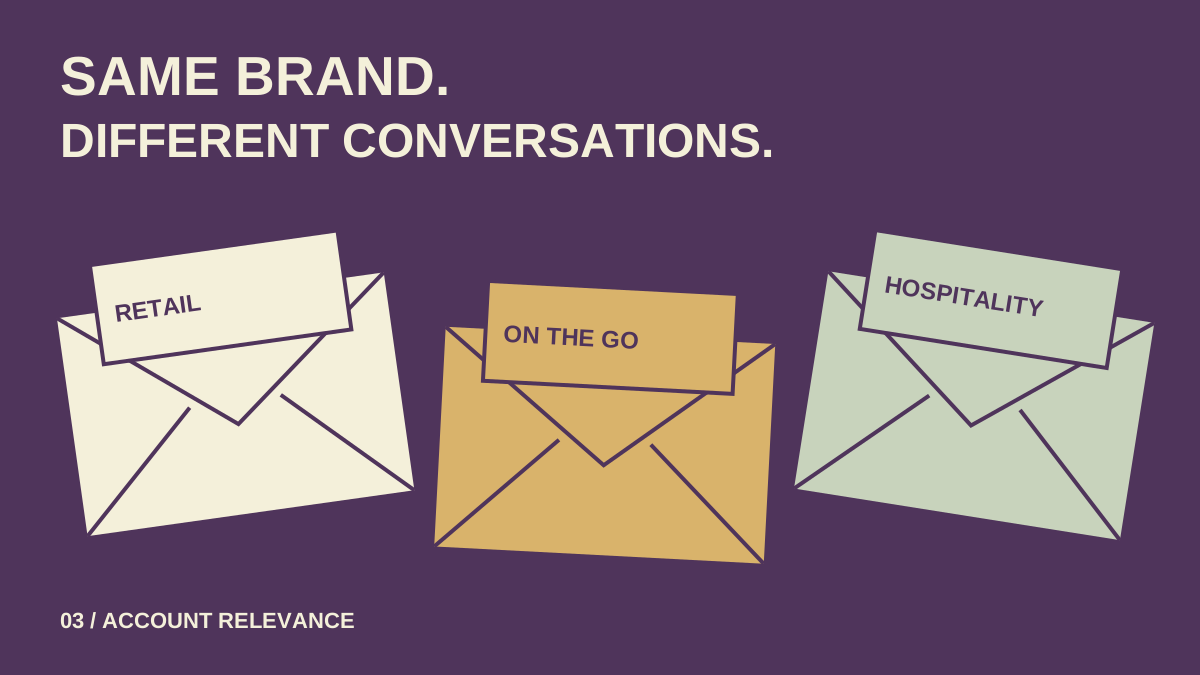
The supermarket version brings assortment and shelf fit forward. The convenience version frames the format around a proposed quick-stop travel occasion. The hospitality version asks where it could fit the guest service model. The underlying product remains the same, so the useful difference is the commercial conversation each opening prepares.
This is account-cluster content that could support a one-to-few programme. It would become part of a live ABM programme only when connected to selected named accounts, validated buying context, coordinated sales activity and measurement. Three sector landing pages on their own do not establish that those activities happened.
Notice what the adaptation does not require: a different visual identity for each channel, an invented customer testimonial or a promise about basket value. Further research might justify changing section order or adding account-specific evidence. Until that evidence exists, the page should ask a better question rather than manufacture an answer.
| Context | Argument to explore | Next conversation |
|---|---|---|
| Supermarkets | Where the range could fit the existing assortment and shelf operations. | Discuss flavour selection, available space and commercial requirements. |
| Petrol and convenience | How the format could fit the outlet and proposed travel occasion. | Discuss store types, placement constraints and replenishment. |
| Hotels and resorts | Which guest occasions the product could serve. | Discuss service format, seasonality and supply needs. |
Give sales the reason to send it.
Deliver the page with a short usage note: who it serves, when it is appropriate, what it can substantiate and what the sender should ask next. A seller should be able to decide whether the asset fits the conversation without reading the entire research folder.
An illustrative introduction could say: “You mentioned reviewing the range for your smaller stores. This version brings the format and assortment questions together. Would it be useful to confirm the store types and supply requirements before discussing an offer?” That example assumes the buyer actually mentioned the review. Without that conversation, rewrite the opening as a question and remove the invented familiarity.
Agree who handles replies before activating the page. Define where the account context will be stored, how a request reaches the right person and what information they need to respond. A CTA that promises a range discussion should lead to someone prepared to have that discussion.
Review the page on a phone and as a forwarded link. Check that product information is readable, the CTA describes a concrete action and forms request only what is needed for that action. Someone receiving the page from a colleague should understand its purpose without the original email.
After a conversation, collect specific feedback: which question was resolved, what remained unclear and what the account asked to see next. “They liked it” is encouraging but difficult to act on. “Operations needs the case dimensions before the buyer can proceed” creates a precise content task.
Measure account progress and diagnose the gaps.
Define success before launch at three levels: delivery to relevant accounts, useful buyer response and commercial progress. Track the account and the version used alongside the action. Aggregate page traffic cannot tell you whether your selected organisations received the intended argument.
For a small programme, an account record can capture whether a relevant contact received the page, replied with a substantive question, involved another evaluator or agreed a next action. Record non-response and disqualification too. They help distinguish an asset problem from poor targeting, unsuitable timing or an offer that does not fit.
Google Analytics defines attribution as assigning credit to touchpoints under a model. Treat that credit as a reporting method. A page view followed by a deal does not, by itself, establish that the page caused the deal. Combine digital observations with the documented sales conversation and state what remains uncertain. Google Analytics: what attribution models assign
With few accounts, report counts and context rather than dramatic percentages from tiny denominators. Compare similar situations where possible and document other changes in outreach or offer. The first review may show that the page needs clearer supply information, not that one headline definitively outperformed another.
| Observation | What to investigate before changing the page |
|---|---|
| Very few relevant visits | Whether the account list, introduction and distribution reached the intended people. |
| Views but no useful response | Whether the question, evidence and next action fit the conversation. |
| Interest, then repeated operational questions | Whether important specifications or supply details are missing. |
| Progress at several accounts | Which buyer-confirmed actions occurred and what contribution the asset plausibly made. |
Before you commission the next page.
Do we need a separate page for every account? Only when the account context justifies a materially different answer and the team can maintain it. Start by grouping shared decisions. Spend individual-account effort where verified requirements make the shared version insufficient.
Can we reuse a landing page we already have? Yes. Audit what it proves, what it leaves unanswered and where the relevant argument appears. The Capri Sun example retained the design while changing the opening, channel explanation and closing conversation. Reuse is sensible when it preserves useful work and makes the decision clearer.
What if we cannot interview buyers yet? Use verifiable public information and authorised sales knowledge, label the gaps and design the first conversation to test them. Do not describe a hypothesised pain point as a finding. A page can responsibly explain a relevant offer while leaving account-specific conclusions open.
The next practical deliverable is a brief for one account cluster: named accounts, owner, buying question, evidence, unresolved requirements and intended response. Get sales to review that before approving the design. It is much cheaper to correct the wrong argument in a brief than across a library of personalised pages.